

Vertical farms evolve as AI takes root
Indoor vertical gardening is changing quickly. For a long time, it meant hydroponics – growing plants without soil, often in stacked layers. But these early systems were often quite manual. Checking nutrient levels, adjusting lights, and monitoring for problems took time and a good eye. It wasn't always the most efficient use of resources, either. Now, artificial intelligence is stepping in to make things smarter.
The growth in the indoor farming sector is noticeable. People are looking for ways to grow food locally, reduce their environmental impact, and have access to fresh produce year-round. Automation is absolutely essential to making this scalable. Traditional farming relies on vast spaces and favorable weather. Indoor vertical farms, especially those powered by AI, can overcome those limitations.
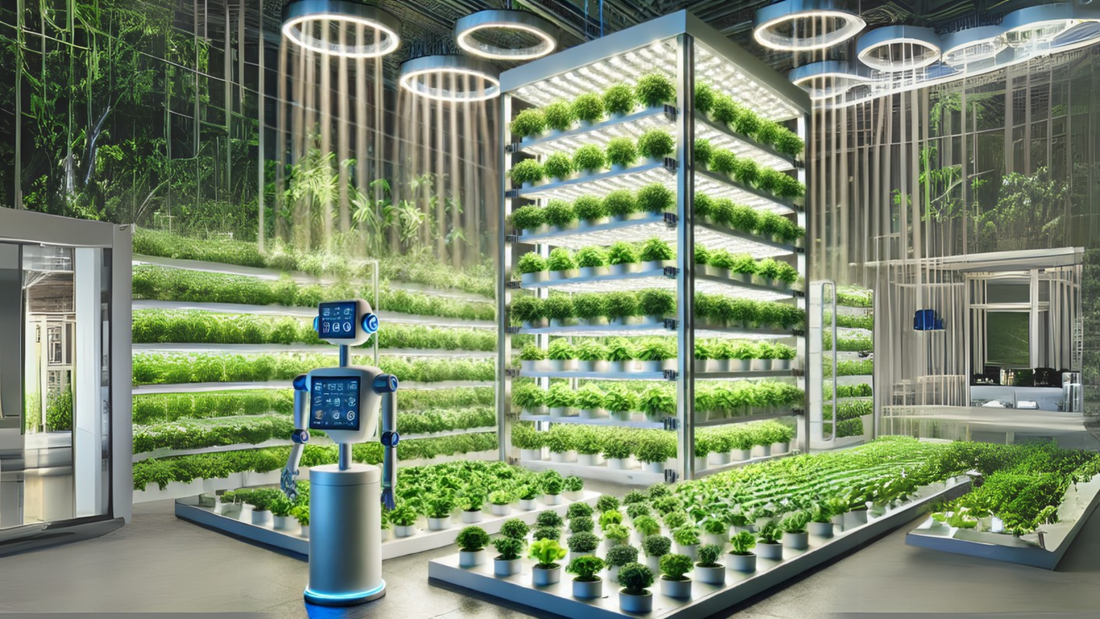
The training materials from phoenix.gov detail the basic components of a vertical farm: multiple tiers for growing, artificial lighting, climate control systems, nutrient solutions, and crucially, sensors and control units. These early systems laid the groundwork, but AI takes these components and makes them truly responsive and adaptive. It's about moving from reacting to problems to preventing them.
The real shift is the move away from static settings. Older systems used rigid schedules for lighting and watering. Now, software makes dynamic adjustments based on real-time data, changing conditions for each plant and growth stage. It maximizes yield and cuts down on waste.
Sensors and the brain of the system
AI-powered vertical gardens rely on a network of sensors to gather data about the growing environment. Light sensors measure the intensity and spectrum of light reaching the plants. Humidity sensors track moisture levels in the air, while temperature sensors monitor the overall climate. But it doesn’t stop there. Sensors also continuously monitor nutrient levels in the water – EC (electrical conductivity) and pH are especially important – as well as CO2 concentrations.
This data feeds into a central controller. These systems usually use microcontrollers—small computers that process information and manage the hardware. You don't usually need to program these from scratch since most consumer systems come with pre-built software. Phoenix.gov data shows these units are the foundation of any successful vertical farm.
The control system doesn’t just record data; it analyzes it. It identifies trends, detects anomalies, and uses this information to make adjustments. For example, if the temperature starts to rise, the system might automatically activate cooling fans. If nutrient levels drop, it will trigger the delivery of more nutrients. It's a closed-loop system that constantly strives to maintain optimal conditions.
The data analysis isn't limited to simple thresholds. More advanced systems employ algorithms to predict future needs. If a plant is entering a rapid growth phase, the system might proactively increase nutrient delivery before a deficiency even occurs. This predictive capability is what sets AI-powered systems apart from their predecessors.
- Light sensors for intensity and spectrum
- Humidity Sensors: Track air moisture levels
- Temperature Sensors: Monitor climate
- EC/pH Sensors: Measure nutrient solution strength & acidity
- CO2 Sensors: Monitor carbon dioxide levels
Sensor Comparison for AI-Powered Vertical Garden Systems
| Sensor Type | Cost | Accuracy | Maintenance | Ideal Plant Applications |
|---|---|---|---|---|
| Soil Moisture | Lower | Good for basic needs | Moderate - requires periodic cleaning/calibration | Leafy Greens, Herbs (sensitive to over/under watering) |
| Light Intensity (PAR) | Moderate | High - crucial for photosynthesis monitoring | Low - generally durable, occasional cleaning | Fruiting Vegetables, all plants requiring specific light levels |
| Temperature & Humidity | Lower | Good - provides overall environmental context | Low - generally reliable | All plant types - baseline monitoring |
| Electrical Conductivity (EC) | Moderate | High - measures nutrient solution strength | Moderate - requires regular calibration and cleaning | Hydroponic Systems, Fruiting Vegetables (nutrient-intensive) |
| pH | Moderate | High - critical for nutrient uptake | Moderate - requires frequent calibration and electrode replacement | Hydroponic Systems, all plants requiring specific pH levels |
| Airflow | Higher | Moderate - difficult to correlate directly to plant health | Moderate - requires sensor placement considerations | All plant types - monitors ventilation effectiveness |
| CO2 | Higher | Good - impacts photosynthesis, but complex to manage | Moderate - sensor drift can occur | High-density plantings, maximizing growth potential |
Qualitative comparison based on the article research brief. Confirm current product details in the official docs before making implementation choices.
Moving beyond simple timers
Simple automation, like turning on lights at a set time, is a good start, but AI goes much further. It’s about using data to make intelligent decisions that optimize plant growth. Predictive modeling is a key component of this. The system doesn't just react to current conditions; it anticipates future needs based on historical data and plant growth models.
For example, AI can analyze how different plants respond to varying light levels, humidity, and nutrient concentrations. It can then use this information to create customized "growing recipes" for each plant variety. These recipes aren't static; they're constantly refined as the system gathers more data. This is a significant advantage over traditional methods, where growers often rely on general guidelines.
Machine learning plays a crucial role in this optimization process. The system learns from its successes and failures, continuously improving its ability to predict and respond to plant needs. If a particular nutrient combination consistently leads to higher yields for a specific plant, the system will prioritize that combination in the future. It’s a self-improving cycle.
Perhaps the most valuable application of AI is in early disease and nutrient deficiency detection. By analyzing subtle changes in plant growth patterns – things a human might miss – the system can identify potential problems before they become serious. This allows growers to intervene quickly, preventing widespread outbreaks and minimizing losses. I think this is where the real value proposition lies – proactive plant health management.
- Data Collection: Sensors gather real-time information.
- Data Analysis: AI identifies trends and anomalies.
- Predictive Modeling: Forecasts future needs based on historical data.
- Recipe Optimization: Customizes growing conditions for each plant.
- Proactive Intervention: Detects and addresses problems before they escalate.
What actually grows well indoors
Not all plants are equally suited to vertical farming, especially in AI-powered systems. The guidelines from phoenix.gov are helpful here: plants should ideally be 12 inches or less in height, fast-growing, tolerant of low light intensity (around 200 μmol·m⁻²·s⁻¹), adaptable to high planting density (around 40 plants per square meter), and generally easy to grow.
Leafy greens like lettuce, spinach, and kale are excellent choices. They grow quickly, require relatively little light, and can be packed densely. Herbs such as basil, mint, and cilantro also perform well in these systems. Strawberries are another popular option, especially everbearing varieties that produce fruit continuously.
Smaller pepper varieties and dwarf tomatoes can also be grown successfully, but they may require more attention and careful management. These plants need more light and nutrients than leafy greens and herbs. Larger fruiting plants, like full-size tomatoes or zucchini, are generally more challenging to grow in vertical systems due to their size and space requirements.
The automated nature of these systems favors plants that are relatively consistent in their growth habits. Plants with unpredictable growth patterns or specific pollination requirements may be more difficult to manage. It's about finding plants that can take advantage of the optimized conditions provided by the AI.
- Leafy Greens: Lettuce, spinach, kale
- Herbs: Basil, mint, cilantro
- Fruits: Strawberries
- Vegetables: Dwarf tomatoes, smaller pepper varieties
Plants for AI Gardens
- Strawberries - (Difficulty: Medium) AI can optimize light spectrum for fruiting and simulate pollination via gentle air circulation. Monitoring for fungal diseases is also key.
- Lettuce & Leafy Greens - (Difficulty: Easy) AI excels at maintaining optimal humidity and nutrient delivery for fast growth cycles. Predictive algorithms can adjust watering based on transpiration rates.
- Herbs (Basil, Mint, Parsley) - (Difficulty: Easy) AI-powered systems can fine-tune light intensity to maximize essential oil production, enhancing flavor. Monitoring for pests like aphids is important.
- Cucumbers (Bush Varieties) - (Difficulty: Medium) Requires AI-driven support structure adjustments as the plant grows and careful monitoring of nutrient solution pH. Benefits from targeted LED lighting.
- Tomatoes (Dwarf/Compact Varieties) - (Difficulty: Hard) AI can manage complex nutrient requirements and provide precise temperature control. Requires AI-assisted pruning recommendations and monitoring for blossom end rot.
- Spinach - (Difficulty: Easy) AI can optimize for nitrate levels, impacting nutritional value. Consistent monitoring of leaf health is crucial to prevent bolting.
- Peppers (Smaller Varieties) - (Difficulty: Medium) AI can control light and temperature to promote flowering and fruiting. Requires monitoring for common pepper pests and diseases.
- Swiss Chard - (Difficulty: Easy) AI can manage light exposure to maximize vibrant stem color and leaf production. Benefits from consistent moisture levels managed by the system.
Gardyn and the current market
Currently, the market for AI-powered vertical garden systems is still developing. Gardyn is one of the more prominent examples, and it’s worth a closer look. Gardyn utilizes a hydroponic approach, meaning plants are grown without soil, in a nutrient-rich water solution. The system is designed to be self-contained and easy to use.
According to mygardyn.com, Gardyn’s system features automated nutrient delivery, remote monitoring via a mobile app, and pre-seeded pods that simplify the planting process. The app allows users to track plant growth, adjust settings, and receive alerts when attention is needed. The system also offers a subscription service for replacement pods.
The Gardyn Home 4 Vertical Hydroponics Growing System Kit, available on Amazon.com, includes 30 non-GMO plants, herbs, and vegetables. It’s designed to be an all-in-one solution for indoor gardening. The system includes LED grow lights and a water reservoir. It’s important to note that the initial investment can be significant.
Gardyn is the most visible player, but the market is expanding. New startups are testing similar hydroponic towers with integrated cameras. It is worth comparing these to DIY builds if the high initial cost of a Gardyn system is a dealbreaker.
- Gardyn: Hydroponic system with automated nutrient delivery and remote monitoring.
- Features: Pre-seeded pods, mobile app control, LED grow lights.
- Availability: Direct from Gardyn and through retailers like Amazon.
What comes next for indoor farming
The future of AI and vertical farming is incredibly promising. We can expect to see even more sophisticated AI algorithms that can optimize plant growth with unprecedented precision. This includes the development of more accurate predictive models, personalized growing recipes, and real-time disease detection systems.
Integration with other smart home systems is also likely. Imagine a vertical garden that automatically adjusts its lighting and watering schedule based on your energy usage and weather forecast. Or a system that can communicate with your smart refrigerator to let you know when your herbs are ready to harvest.
Computer vision will play an increasingly important role. Cameras could be used to monitor plant health, detect nutrient deficiencies, and even identify pests. This would allow for even more proactive and targeted interventions. The potential for automation is nearly limitless.
Ultimately, the goal is to create a sustainable and efficient food system that can feed a growing population. AI-powered vertical farming has the potential to revolutionize the way we grow food, making it more accessible, affordable, and environmentally friendly. Optimizing energy efficiency and reducing water consumption will be key areas of focus. This isn't just about growing more food; it’s about growing it better.
- Advanced AI Algorithms: More precise optimization of plant growth.
- Smart Home Integration: Seamless connection with other smart devices.
- Computer Vision: Real-time plant health monitoring.
- Personalized recipes for specific plant varieties
- Sustainable Practices: Reduced energy and water consumption.

No comments yet. Be the first to share your thoughts!