

50 Cucumbers: A Realistic Goal?
Harvesting 50 cucumbers from one indoor tower is a grind, but I've seen it done. You can't just plug in a tower and walk away. It takes a specific setup and a strict schedule, but the yield is real if you're willing to put in the daily work.
Several factors play into success. Variety selection is huge – some cucumbers are simply more productive than others in confined spaces. Light is critical; cucumbers are sun-loving plants and need a strong light source indoors. Consistent watering and feeding are non-negotiable. But perhaps the most important technique is succession planting, which we'll cover later. This means starting new plants regularly to ensure a continuous harvest rather than one big flush.
Indoor vertical gardening is gaining popularity for very good reasons. It’s a fantastic way to maximize space, especially for those of us without yards. It gives you a level of control over the growing environment that outdoor gardening just doesn’t offer, shielding plants from harsh weather and pests. And, of course, it extends the growing season, allowing you to enjoy fresh cucumbers well beyond the typical harvest window. It’s a rewarding way to grow your own food.
Don't expect 50 perfect, market-ready cucumbers right off the bat. It takes practice. Be prepared to learn from your mistakes and adjust your approach. But the taste of a homegrown cucumber, picked fresh from your indoor garden, is worth the effort. Consider this a long-term project with delicious rewards.
pick the right seeds
Not all cucumbers are suited for vertical growing, or for indoor conditions in general. You’ll want to steer clear of sprawling vining types that will quickly take over your space. There are three main categories to consider: bush, vining, and compact. Bush varieties are naturally smaller and more contained, but may have lower overall yield. Vining types are incredibly productive but need a lot of support and pruning. Compact varieties strike a balance between the two.
I’ve had good results with "Spacemaster’ – it’s a bush variety specifically bred for containers and smaller spaces, maturing in around 50 days. ‘Bush Champion’ is another reliable option, offering good disease resistance and a decent yield. For a snack-sized option, ‘Patio Snacker’ is excellent, producing sweet, crisp cucumbers in about 48 days. And if you’re looking for something a little different, ‘Miniature White" is a beautiful and productive variety.
A key consideration is whether the variety is parthenocarpic. These cucumbers don’t require pollination to set fruit, which is a huge advantage indoors where you won’t have bees buzzing around. If you choose a non-parthenocarpic variety, you’ll need to hand-pollinate the flowers using a small brush, transferring pollen from the male to the female flowers. It's a bit tedious, but doable. Varieties like "Diva" are parthenocarpic.
Consider fruit size too. Smaller cucumbers generally mature faster and are better suited for container growing. Larger varieties require more space and nutrients to develop properly. Ultimately, the best variety for you will depend on your preferences and available space. I recommend starting with a couple of different varieties to see what performs best in your setup.
- Spacemaster: A reliable bush variety that hits maturity in 50 days.
- Bush Champion: Good disease resistance, decent yield.
- Patio Snacker: Snack-sized, 48 days to maturity.
- Miniature White: Unique and productive.
Cucumber Varieties for Vertical Indoor Growing
| Variety Name | Type | Days to Maturity | Fruit Size | Pollination Requirement | Indoor Suitability |
|---|---|---|---|---|---|
| Spacemaster | Compact Bush | 55-60 | 6-8 inches | Yes | 4 stars |
| Bush Champion | Bush | 52-57 | 6-8 inches | Yes | 3.5 stars |
| Patio Snacker | Compact Bush | 50-55 | 4-6 inches | No | 4.5 stars |
| Straight Eight | Vining | 58-65 | 8-10 inches | Yes | 3 stars |
| Diva | Vining | 60-68 | 7-9 inches | Yes | 2.5 stars |
| Little Leaf | Compact Vining | 50-55 | 4-6 inches | Yes | 4 stars |
Illustrative comparison based on the article research brief. Verify current pricing, limits, and product details in the official docs before relying on it.
tower setups that actually work
Let’s talk about the physical setup. There’s a surprising amount of variety in vertical growing systems. You could opt for stacked planters, where plants are grown in individual pots stacked on top of each other. PVC towers are a popular DIY option, constructed from PVC pipes with holes for planting. Hydroponic systems, which involve growing plants without soil in a nutrient-rich water solution, are also effective, but more complex.
The pros and cons of each system are worth considering. Stacked planters are easy to set up and relatively inexpensive, but can be less efficient with space and water. PVC towers offer good drainage and aeration, but require some construction skills. Hydroponic systems provide optimal nutrient delivery and faster growth, but require more monitoring and maintenance. I've found a well-designed PVC tower to be a sweet spot for many home growers.
Drainage and aeration are absolutely crucial, regardless of the system you choose. Cucumbers don’t like soggy roots. Make sure your system allows excess water to drain freely and that the roots have access to oxygen. The size of the tower will depend on your available space and desired yield. A larger tower will accommodate more plants, but will also require more light, water, and nutrients. A good starting point is a tower that can hold 6-8 plants.
If you’re going the hydroponic route, you’ll need a reservoir to hold the nutrient solution and a pump to circulate it. The growing medium is also important. Coco coir is a popular choice, providing good aeration and water retention. Perlite is another option, offering excellent drainage. Rockwool is often used in hydroponic systems, but it’s less environmentally friendly. The right medium will support the roots and provide access to nutrients.
Light, Water, and Nutrients
Cucumbers are notoriously hungry and thirsty plants. They need a lot of light, water, and nutrients to thrive. When it comes to light, full-spectrum LEDs are the way to go. Avoid relying on natural sunlight alone, as it’s often insufficient, especially during winter months. Aim for 14-16 hours of light per day. I’ve had success with grow lights that output around 300-400 PAR (Photosynthetically Active Radiation).
Cucumbers are thirsty. Stick your finger an inch into the soil; if it's dry, water it. I prefer deep, infrequent watering to keep the roots reaching down, though a self-watering reservoir is the safest way to prevent the plants from wilting while you're at work.
Nutrient needs change throughout the growing cycle. During the vegetative stage, cucumbers need a lot of nitrogen to promote leafy growth. A fertilizer with a ratio of 3-1-2 (nitrogen-phosphorus-potassium) is a good choice. Once the plants start flowering, switch to a fertilizer with a higher phosphorus content to encourage fruit development. A 1-2-1 ratio is ideal. Supplement with micronutrients like calcium and magnesium to prevent deficiencies.
Maintaining the correct pH level is also important. Cucumbers prefer a slightly acidic pH of 6.0-6.8. You can use a pH meter to test the soil and adjust it as needed. Using a balanced fertilizer designed for hydroponics can help maintain the correct pH. Remember, consistent monitoring and adjustment are key to providing your cucumbers with the nutrients they need.
pruning and vertical support
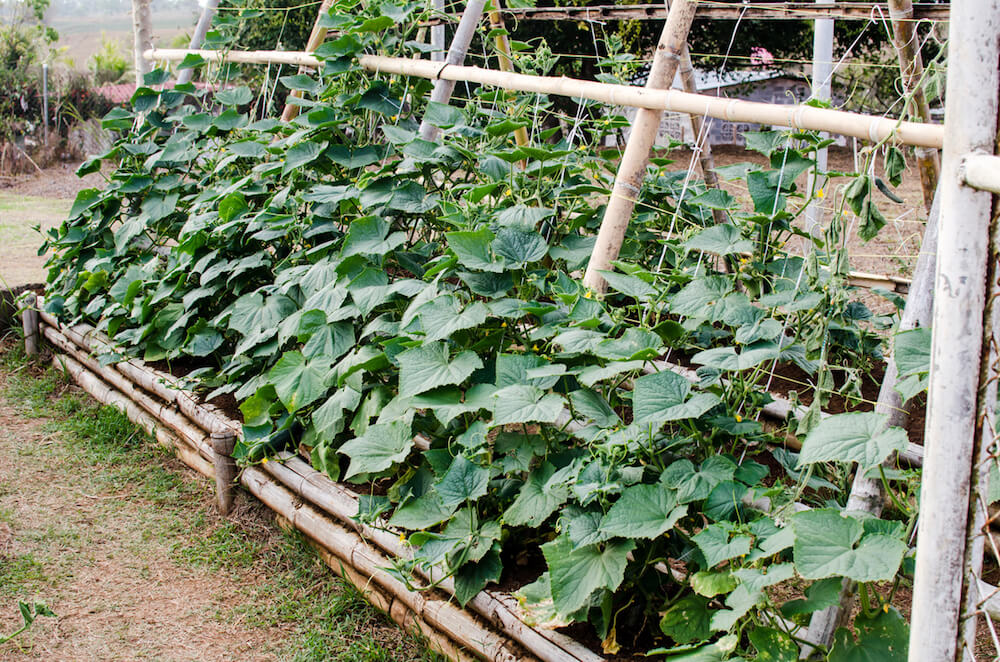
Cucumbers are climbing plants and need support to grow vertically. Without it, they’ll sprawl and take up valuable space. There are several training methods you can use. Twine is a simple and inexpensive option – tie the vines loosely to the tower structure as they grow. Netting provides a wider surface for the vines to climb, but can be more difficult to manage. Bamboo stakes offer sturdy support, but may require more frequent adjustments.
Pruning is also important. Remove suckers – the small shoots that grow between the main stem and the leaves – to encourage vertical growth and maximize fruit production. This directs the plant’s energy towards developing cucumbers rather than leafy growth. I find removing these suckers every week keeps the plant focused.
Good airflow is crucial to prevent fungal diseases, especially in humid indoor environments. Space the plants adequately to allow for air circulation. You can also use a small fan to improve airflow. Gently guide the vines as they grow, avoiding damage to the fruit. Don't be afraid to redirect growth to maximize light exposure.
Managing leaf growth is another important aspect. Remove any yellowing or dead leaves to improve airflow and prevent the spread of disease. You may also need to prune some leaves to allow more light to reach the developing fruit. Regular pruning encourages the plant to focus its energy on producing a bountiful harvest.
Pest and Disease Management
Even in a controlled indoor environment, cucumbers are susceptible to pests and diseases. Common cucumber pests include aphids, spider mites, and squash bugs. Aphids are small, pear-shaped insects that suck sap from the leaves. Spider mites are tiny arachnids that create webbing on the plants. Squash bugs are larger, brown insects that feed on the leaves and fruit. Learn to identify these pests early on.
Organic pest control methods are preferred. Neem oil is a broad-spectrum insecticide that effectively controls many common pests. Insecticidal soap is another option, but it’s less effective against certain pests. Introducing beneficial insects, such as ladybugs and lacewings, can also help control pest populations. I’ve had success with releasing ladybugs into my indoor garden.
Common cucumber diseases include powdery mildew and downy mildew. Powdery mildew appears as a white, powdery coating on the leaves. Downy mildew causes yellow spots on the leaves and a fuzzy growth on the underside. Good airflow and sanitation are key to preventing these diseases. Remove any infected leaves immediately. A diluted baking soda solution can help control powdery mildew.
Recognizing nutrient deficiencies is also important. Yellowing leaves can indicate a nitrogen deficiency. Stunted growth can be a sign of a phosphorus deficiency. Addressing these deficiencies promptly will help keep your plants healthy and productive. Maintaining a consistent watering and feeding schedule is the best way to prevent nutrient deficiencies.
Harvesting and Succession Planting
Knowing when to harvest is crucial for getting the best flavor and texture. Cucumbers are typically ready to harvest when they reach a certain size and color, depending on the variety. Check the seed packet for specific guidelines. Generally, cucumbers should be firm to the touch and have a deep green color. Don’t let them get too large, as they can become bitter.
Harvesting regularly encourages continued production. Don't wait until all the cucumbers on a plant are ripe before harvesting. Pick them as they reach maturity. This signals to the plant that it’s time to produce more fruit. Using a sharp knife or scissors, cut the cucumber from the vine, leaving a small piece of stem attached.
This is where succession planting comes into play to reach that 50+ cucumber goal. Start new seeds every 2-3 weeks. This ensures a continuous harvest throughout the growing season. You can stagger the plantings, starting with a few plants and adding more as the previous ones mature. It ensures you're always harvesting something.
Consider saving seeds from your best-performing plants for future plantings. This allows you to develop a strain that is well-suited to your growing conditions. Properly dried and stored seeds can remain viable for several years. It’s a rewarding way to close the loop and become more self-sufficient.
What is your biggest challenge when growing cucumbers indoors in a vertical tower setup?
Vote below!

No comments yet. Be the first to share your thoughts!